
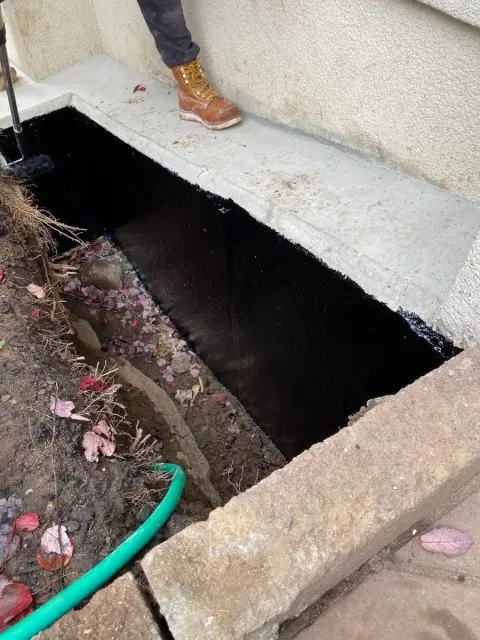
Water on a basement wall can come from surface runoff or from saturated soil pressing through joints and porous masonry. Before you coat a wall or price a larger repair, a few checks tell you which problem you have. This is a first-look guide; for the full systems, cost, and permit breakdown, see basement waterproofing in Bergen County.
What Should You Inspect After Rain?
Start while the marks are fresh. Note where the dampness starts, how high it reaches, and whether it follows one crack or the seam where the wall meets the floor. Take a few clear photos from the same positions so you can compare the pattern after the next rain.
Look at the wall before wiping or coating it. White powder on masonry is efflorescence, the mineral salt left after moisture passes through the wall and evaporates. Its height and shape help our crew follow the moisture path during an assessment.
Check the wall-to-floor seam around the wet area. This seam is called the cold joint because the wall and slab were placed at different times. Dampness that returns there after hard rain is useful evidence of a repeating water path.
Write down the timing as well. A mark that appears while a gutter is overflowing points toward a different first check than a seam that keeps darkening after the rain has ended.
What Can Gutters, Downspouts, and Grade Fix?
Gutters, downspouts, and grade can fix seepage caused by roof and surface water collecting beside the foundation. Start by looking from the ground for gutters spilling over, downspout elbows that have come apart, and discharge that ends beside the foundation. Fall leaves can partly clog a gutter, sending a large amount of roof water over one section during a hard rain.
Follow that water across the yard. Soil that has settled toward the house or a low strip beside the wall keeps the foundation wet. The downspout also needs a discharge point where water can keep moving away without running back to the same wall or onto a neighbor’s property — yard drainage or a french drain handles what grading alone cannot.
Clearing debris from the bottom of a downspout, reconnecting a loose extension, and correcting a small area of settled grade can be reasonable homeowner work. Make one correction at a time, then compare the same basement marks after the next rain. A dry wall after that change tells you the surface-water correction mattered.
When Will Masonry Sealer Fail?
Masonry sealer fails when active seepage keeps pushing water or vapor through the wall. The pressure comes from saturated soil outside the foundation, and another coat cannot relieve it. Bubbling paint, a dark wall during rain, or fresh efflorescence after cleaning shows that the moisture path is still active.
A coating can protect sound masonry after the water path has been controlled. Applying it over a wet seam or a wall that keeps changing color covers the evidence our crew needs to assess the problem. Leave the area visible long enough to record what happens during rain.
Recurring water at the wall or cold joint needs a full assessment. Our basement waterproofing service covers that diagnosis and the repair scope after you have checked for an obvious gutter, downspout, or grade problem.
When Should You Stop Doing It Yourself?
Stop when the work moves beyond safe surface drainage. Cutting the slab, excavating to the footing, changing sump discharge plumbing, and repairing a structural crack require equipment and decisions that affect the foundation or the way water leaves the property.
A wall that has shifted, bowed, or opened along a crack needs professional assessment. Repeated seepage after the gutter, downspout, and grade checks also deserves a closer look before you spend more money on sealer.
Bergen Restoration can inspect the wet pattern, trace where water is reaching the basement, and tell you whether another surface correction is reasonable or the foundation needs a waterproofing repair.