
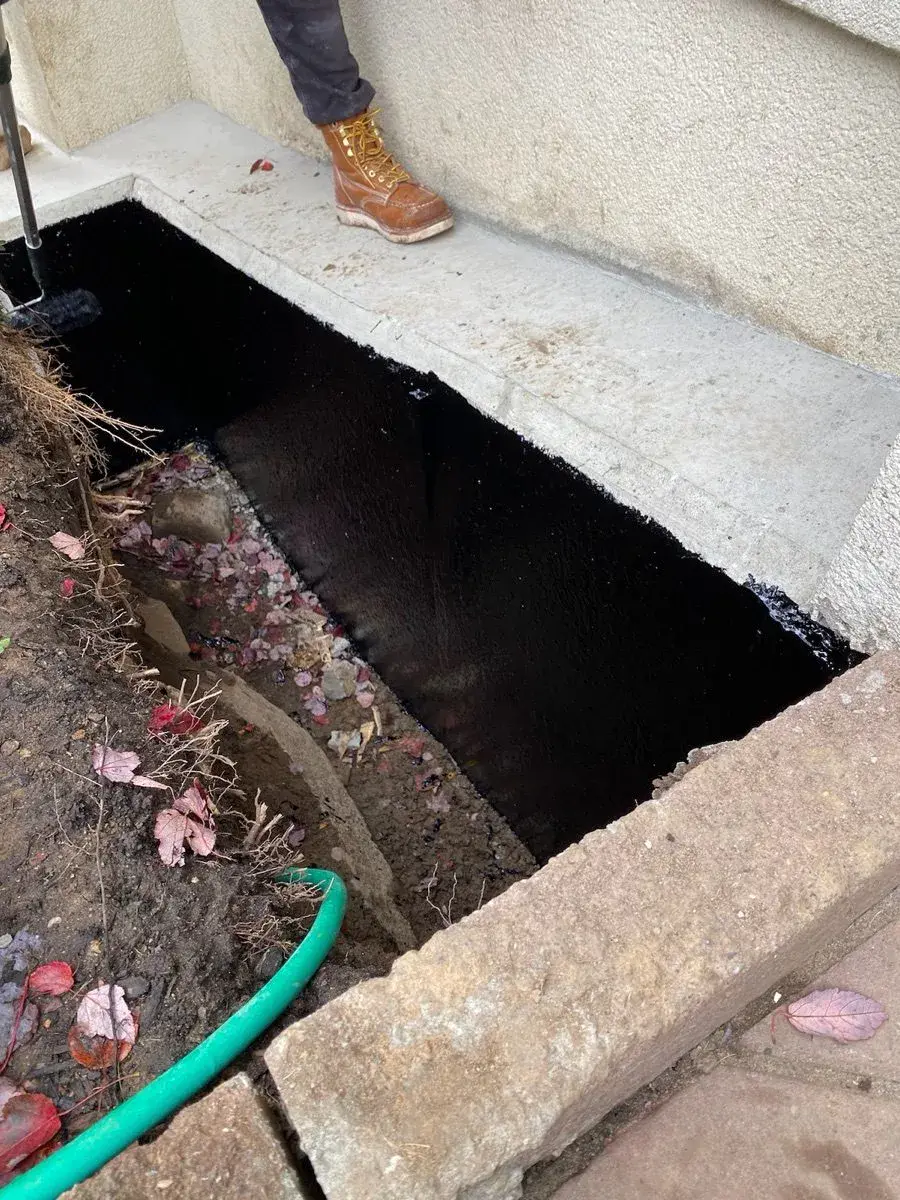
Basement Waterproofing
A dry basement is diagnosis plus the right system — interior perimeter drains, sump setups, exterior membranes — not one product for every wet wall. We find how water enters before we quote anything.
Interior Basement Waterproofing
Wet basements cause structural damage, ruined finishes, and lost living space. We install interior waterproofing systems — including drainage channels, sump pumps, and vapor barriers — to keep water out and protect your investment.
- Interior drainage channel systems
- Sump pump installation & battery backup
- Vapor barriers & wall encapsulation
- Crack injection & foundation sealing
- Dehumidification solutions
- Exterior grading & downspout management
If water has already damaged finished space, framing, flooring, or walls, Bergen Restoration can combine waterproofing with broader home restoration and rebuilding across Bergen County.
Serving homeowners throughout all 70 Bergen County municipalities. View our Bergen County service areas. Waterproofing came first in our Hackensack entertainment basement — the right order for any space you plan to finish.
Related drainage services: Gutter Replacement & Downspout Systems, Yard Drainage & Downspout Systems, French Drain Installation, and Foundation Crack Repair, alongside Basement Flooring and Basement Water Damage Cleanup.
Dry Your Basement With Confidence
Diagnosis-first waterproofing guidance from registered Bergen County contractors.
NJ Code & Permits
Basement waterproofing work involving structural changes, drainage, or plumbing typically requires permits in Bergen County municipalities.
- Building permit: required for interior drainage work; the fee is set by your municipality and the scope.
- Plumbing permit: required for the sump discharge tie-in when not gravity-to-daylight.
- Grading permit: required for exterior excavation in some towns.
- Discharge regulations: sump water cannot discharge into sanitary sewer in most Bergen County municipalities.
- Approval windows: 1–4 weeks typical for interior work, longer for exterior.
Planning a project like this? Get an estimate.
Where Water Comes From
Basement moisture has specific sources: groundwater, surface runoff, condensation, plumbing leaks. The right waterproofing solution depends on which.
- Groundwater (hydrostatic pressure): water entering through slab-wall joint or floor cracks. Needs interior or exterior drainage.
- Surface runoff: water entering through window wells, grade issues, or gutters. Needs grading, window wells, gutter extensions.
- Condensation: humid air meeting cool surfaces. Needs dehumidification + ventilation.
- Plumbing leaks: pipe, fixture, or appliance leaks. Needs plumbing repair, not waterproofing.
- Foundation cracks: active leaks through visible cracks. Need crack injection or exterior sealing.
- Diagnostic inspection: we walk the house, check grade, gutters, windows, walls, floor, stains, odor.
Planning a project like this? Get an estimate.
Interior Drain Options
Interior waterproofing systems live under or alongside the slab. They catch water entering through the walls or slab and route it to a sump pump for discharge.
- Interior perimeter drain (French drain): trench cut in slab along inside of foundation wall, perforated pipe in gravel, graded to sump.
- Baseboard / sub-surface channel: less invasive; channel attached to slab edge, captures wall seepage.
- Sub-slab drainage: full under-slab perforated pipe; used where groundwater is significant.
- Vapor barrier wall wrap: dimpled membrane on the wall directing incoming water behind finish to the drain.
- Sump pump type: cast-iron submersible pump with sealed lid; battery backup recommended for NJ storm outages.
- Discharge line: gravity-fed to daylight cheapest; frost-free outlet required for winter reliability.
Planning a project like this? Get an estimate.
Before Finishing the Basement
Finishing a basement over an unaddressed moisture issue wastes the investment. Waterproofing runs before framing; the sequence matters.
- Step 1: dry the basement and identify moisture source.
- Step 2: install interior drainage + sump if needed.
- Step 3: seal foundation cracks; apply wall wrap / dimple membrane.
- Step 4: run dehumidifier 30+ days to verify dry conditions.
- Step 5: start framing, insulation, drywall — over dry surface.
- Shortcut risk: finishing before verifying dryness leads to ruined drywall and ripping out the finish within 1–3 years.
Planning a project like this? Get an estimate.
Pumps, Pits & Backup
Sump pumps fail. Battery backups run out. Pits clog. Maintenance is the difference between a working system and a flooded basement.
- Sump pump testing: run water test quarterly; replace every 7–10 years even if working.
- Battery backup: test annually; replace battery every 4–6 years.
- Water-powered backup (alternative): uses municipal water pressure when power fails; no battery to maintain.
- Pit cleanout: every 2–3 years, remove sediment buildup.
- Discharge line check: annual inspection for frost damage or ice blockage in winter.
- Alarm system: water sensor with phone alert when pit rises beyond normal — cheap insurance.
Planning a project like this? Get an estimate.
What Drives Waterproofing Cost
Waterproofing cost is set by the system the diagnosis calls for and how much of the basement it has to cover — from a single sump to full exterior excavation. Interior perimeter drain plus sump is the most common solution.
- Sump pump + pit only: the entry point when the pit just needs a reliable pump; a battery backup adds cost but carries the house through a storm outage.
- Interior perimeter drain + sump (partial): single-wall runs where seepage is localized.
- Interior perimeter drain + sump (full basement): scales with the linear feet of wall and the amount of slab cutting involved.
- Exterior excavation system: the highest-cost path, reserved for structural cases or exterior source control that interior collection cannot solve.
- Wall crack sealing (urethane injection): the lowest-cost targeted repair, priced per crack.
- Dedicated dehumidifier: added where humidity rather than liquid water is the issue; cost depends on unit size and condensate routing.
Every basement is different — get an estimate for a number tied to your walls, not a bracket.
Pricing and timelines are planning ranges. Final cost and schedule depend on site conditions, access, structural requirements, materials, permit review, inspections, weather, material lead times, and scheduling availability.
Your Basement Waterproofing Process
Inspection
We inspect moisture sources, wall seepage, floor cracks, sump conditions, and foundation access.
Scope & plan
We finalize the system plan, materials, scope, and any permits or trade coordination required.
Repair or install
Crew executes the repair or installation with regular check-ins and daily cleanup.
Testing & cleanup
Testing, performance verification, and cleanup; punch-list closeout and documentation.
What “Waterproofing” Actually Means
Three different jobs share one word. The right one depends on where the water enters — which is why diagnosis comes before any quote.
Diagnose while it’s wet
Cold joint at the slab edge, cracks in the wall, window wells, or moisture wicking through block — each points to a different fix. The best time to diagnose is during or right after rain, when the path shows itself. Guessing from a dry basement is how the wrong system gets sold.
Manage water that arrives
Interior perimeter drains and a sump system collect water at the slab and move it out. They don’t stop water from reaching the foundation — they control it reliably, year-round, and they’re the practical answer for most finished basements.
Stop water at the wall
Excavation, membrane, and exterior drainage stop water before it touches the foundation — the most complete fix, and the most disruptive. It makes the most sense when grading or other exterior work already has the wall exposed, or when interior control isn’t enough.
The rest of the water system
Wall cracks get injection or reinforcement. Roof and surface water belong to gutters and yard drainage. A dry basement is usually two or three small systems working together — not one heroic product.
Frequently Asked Questions
Interior perimeter drain + sump systems (most common), exterior excavation systems, sump pump installation + battery backup, crack injection, dimple membrane wall wrap, and dehumidifier systems.
Only if moisture is present. A dry basement can be finished directly. Basements with active seepage, damp walls, efflorescence, or flooding history need waterproofing first — finishing over moisture wastes the investment.
Diagnosis first. We walk the house, inspect grade, gutters, walls, floor, and discuss history. The right system depends on the source of moisture, not a one-size-fits-all recommendation.
Every project uses a milestone payment schedule tied to agreed phases — set out in writing in your contract. Homeowners who want to finance work typically use third-party home-improvement lenders; we're happy to share the names of lenders other clients have used. Any financing arrangement is between the homeowner and the lender.
For most Bergen County residential projects, 3 to 8 weeks from contract signing to on-site start. Summer and early fall fill fastest. Basement waterproofing is usually scheduled after moisture inspection, drainage review, sump evaluation, and scope planning. Active flooding or standing water is routed through the water-damage response process first.
No. Interior drainage work is noisy and dusty but doesn't require move-out. We contain dust and maintain access to the rest of the home.
Interior handles most Bergen County cases and costs roughly half as much. Exterior excavation is for severe cases involving structural damage, major cracking, or combined foundation repair.
Yes in Bergen County. Storms and power outages correlate. A pump without backup during a summer thunderstorm or winter storm means a flooded basement. Battery backup adds cost but carries the pit through a storm outage.
Bergen Restoration provides written workmanship warranty terms with every contract. Manufacturer warranty coverage depends on the selected product, installation requirements, and manufacturer terms. Coverage is reviewed before you sign. If something isn't right within the warranty window, we come back and fix it.
All 70 Bergen County municipalities. Residential only.
Yes. Bergen Restoration is a registered New Jersey Home Improvement Contractor (NJHIC# 13VH08865500) with commercial general liability and workers’ compensation coverage; documentation available on request.
Yes, when the water is coming through the walls or the slab and we can collect it and pump it out. Inside work does not replace fixing grade, gutters, and downspouts on the outside. Those fixes stay part of the same plan or can be done as a separate job.
If the basement keeps taking water, finishing the walls or leaving stored goods down there without managing the water can and probably will cause damage. Waterproofing is worth it when we can determine how the water gets in and stop it.
Most wet basements can be managed once we know whether the water is coming through a foundation crack, a high water table, or from the yard. Paint-on sealers on a wall that is still taking water do not count as a fix.
Encapsulation is usually a moisture upgrade. A sudden burst pipe in the crawlspace can be a claim. Slow water accumulation is usually maintenance. The insurer decides.
Related reading: Basement waterproofing in Bergen County and Water in your basement? What to check first.
Get Your Estimate
Reach us by phone or email and tell us about your basement waterproofing project. We will follow up with the next best step for your home.
Commercial general liability and workers’ compensation coverage. Documentation available on request.
Let's Talk About Your Project
Describe when and where the water arrives — we'll diagnose the entry path before recommending anything.