
Indoor vs outdoor sauna is a house question. You’re picking where the heat and the moisture go.
Both indoor and outdoor sauna builds usually need a dedicated hardwired heater circuit, sized to the listing. Don’t guess an amp number. Don’t run it on an extension cord. Indoors, you foil and ventilate so the rooms next to the sauna stay dry. Outdoors, you need a level, draining pad and a place where the sauna can legally sit.
What influences the decision
| Gate | Indoor | Outdoor |
|---|---|---|
| Power | Dedicated heater circuit to the room | Same circuit class, usually a longer outdoor run |
| Moisture | Foil vapor barrier, insulation, ventilation | Draining pad, weatherproof shell, keep washdown off the house foundation |
| Legal shell | A room that can take heat; electrical permit path is common | Zoning plus building for a permanent pad or cabin, plus electrical |
Go over that path with the construction office for the job address. Indoor work usually depends on the electrical section. A permanent outdoor cabin usually adds zoning and building. A heated outdoor room with utilities doesn’t get a shed pass.
The kit sticker is the easy number. The project is the room or the pad, plus the circuit. On a 1950s–1970s split-level, that often turns into a panel conversation. Outdoor planning bands here often sit around $8,000–$16,000 once pad and electrical are in. Indoor packages often land in the $6,000–$12,000 range once the room and circuit are included.
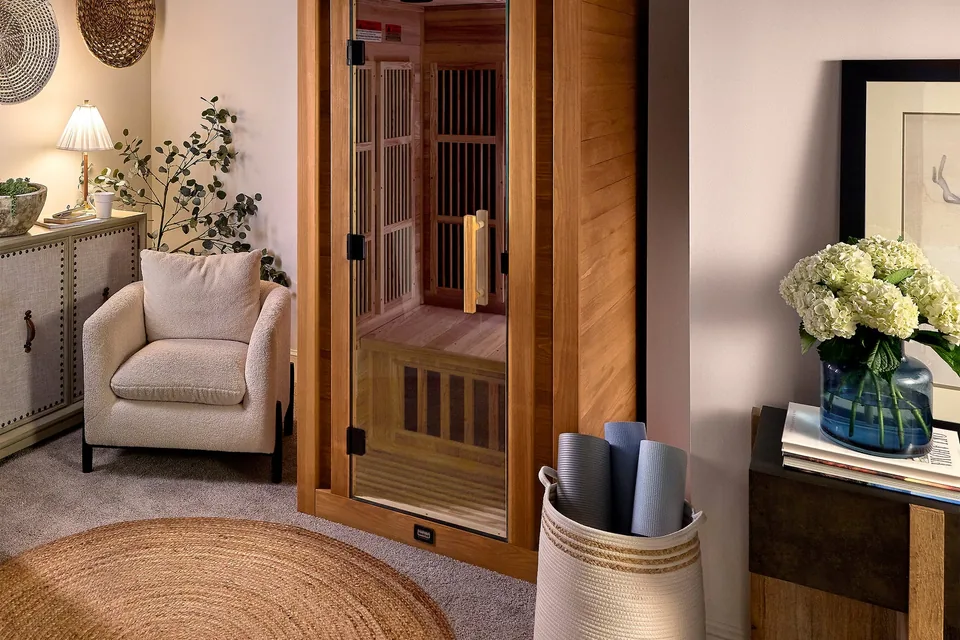
Build indoor when the room can take heat and vapor
The free floor on a lot of these split-levels is the basement. That’s also where seepage shows at the slab-wall joint after a hard rain. Put a sauna on a damp slab and you’re loading the framing next to it with more moisture. Waterproof that space first, or look at the yard.
You need a room you can insulate, foil, ventilate, and feed with a heater. Clearances to benches and walls are in the listing for a reason. A spare closet with a plug-in unit usually fails all three at once.
Infrared versus traditional electric is a heater choice. It doesn’t skip the circuit or the vapor decisions. For more detail, read the indoor sauna page.
Build outdoor when the yard can fit a pad
The sauna walls need to sit on a pad sized for filled weight, drained so freeze-thaw doesn’t pond under the floor.
A permanent outdoor sauna is an accessory structure: setbacks, lot coverage, and sometimes a board or HOA approval. Check those before you order the kit. On a tight lot the placement can be the first point of failure. A prettier heater doesn’t fix that.
Electric heaters are the usual residential choice. Wood-fired adds flue clearances to fences, eaves, and the neighbor’s line — confirm mechanical and building with the town. Barrel versus cabin is a shell choice for the outdoor sauna page, not this one.
In dense Fort Lee or Edgewater condos, the patio is often common-element. Board rules can stop a freestanding unit even when you own the apartment. Indoor is the honest path there.
When you should build neither
Don’t put an indoor sauna in a wet basement. Fix the water, or go outdoor if the yard gates pass.
Don’t order an outdoor kit before zoning, setbacks, and any board rules are checked. You don’t want a very expensive crate in the driveway.
Original-era electrical panels on 1950s–1970s houses often already run tight. A new dedicated heater circuit may surface a panel or service upgrade. If you weren’t going to touch the panel, wait — or budget that work as part of whatever sauna placement you choose.
If you’d use a sauna a handful of times a year, a club membership is cheaper than a pad and a circuit.
Next step to make a decision
You’re comparing. The next step is one walk around your house, condo, or property that checks the room, the pad, and the electrical panel — and decide if placing a sauna there is realistic.
Once you’ve decided, the indoor sauna and outdoor sauna pages cover how moving forward with either choice looks.