
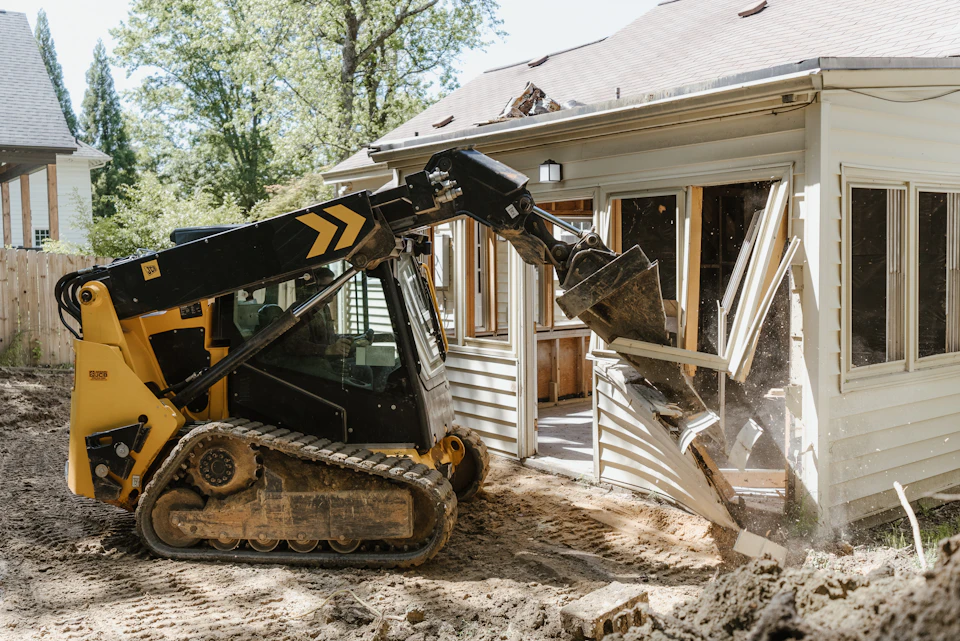
Interior & Selective Demolition
Taking out one wall, a kitchen, or a bath while the rest of your home stays intact. Precise, contained, dust-controlled demolition that preps your Bergen County remodel — with full debris haul-off when it’s done.
Precise, Contained Demolition
Selective demolition is careful, not reckless. We take out a single wall, a kitchen, a bath, or one damaged section — while protecting the rooms that stay, keeping dust in the work area, and hauling every load out. Done right, it is the quiet first step that lets your remodel go smoothly.
- Single-wall & partition removal
- Selective strip-outs for remodels
- Kitchen & bath tear-outs
- Load-bearing wall openings (shored)
- Dust control & site protection
- Debris haul-off & disposal
Demolition Guides
Scope, safety, and disposal decisions that determine whether demo goes smoothly or turns into a surprise.
Scoping the Demolition
Selective demo lives or dies on a clear boundary. Before anyone picks up a tool we walk the one area coming out, mark where the demo stops, and confirm how a single room’s debris will leave a house you’re still living in.
- Keep vs remove: the exact wall, fixture, or finish coming out is marked, and the line where demo stops is taped so the adjoining rooms stay untouched.
- The one-room path: how debris leaves that room — which doorway, which stairs, where the container sits — is set before day one so the rest of the house isn’t a thoroughfare.
- What’s behind it: plumbing, wiring, and ductwork buried in the wall you’re opening are traced first, since a branch line serving another room often runs through it.
- Salvage calls: cabinets, a vanity, trim, or a door worth reusing in the remodel are pulled carefully and set aside instead of going in the pile.
- Written footprint: the demo footprint and haul-off are put in writing so everyone agrees where selective stops before it starts.
Planning a project like this? Get an estimate.
Protection & Dust Control
On a selective job the house stays occupied, so all the dust from the room coming out has to stay in that room. The bedrooms, the living room, and the rooms you’re keeping should feel untouched while the work area is torn down.
- Zip-wall the opening: the doorway to the work area is closed off with plastic and a zippered access so dust doesn’t drift into the rooms you’re living in.
- Protected path: floors and stairs between the work area and the exit door are covered end to end, since debris crosses lived-in space to get out.
- Air kept negative: extraction or negative air pulls fine dust toward the work area and out, not down the hall, where the job warrants it.
- Contents shifted clear: furniture or finishes that have to stay near the work area are covered or moved out of the way before demo, not after.
- Swept daily: the one room is knocked down and swept at the end of each day so you’re not living beside an open pile.
Planning a project like this? Get an estimate.
Utilities, Shut-Offs & Hazards
On a selective strip the goal is to make the one work area safe without shutting the whole house down. The branches feeding that room are isolated, and any suspect material in the section coming out is cleared by the right specialists first.
- Water: the supply branch to the work area is shut and capped so a line hidden in that wall doesn’t flood the room mid-strip — the rest of the house keeps its water.
- Gas & electric: only the circuits and gas serving the one room are disconnected by qualified trades; power stays on everywhere you’re still living.
- Asbestos & lead: we do not perform abatement; where testing flags hazardous material in the section coming out, we coordinate with licensed abatement specialists to clear it before demolition proceeds.
- Older homes: in pre-1980s Bergen County homes we treat the flooring, insulation, and coatings in that one room with caution until testing clears them.
- Structural check: if the wall you’re opening turns out to carry load, shoring goes in before anything is cut — even on a small selective job.
Planning a project like this? Get an estimate.
Load-Bearing vs Partition Walls
Most selective jobs come down to one wall. Whether it comes out in an afternoon or needs a beam depends entirely on whether it’s holding the floor above up.
- Identify the load: before the one wall is touched we determine whether it carries the floor, ceiling, or roof above it.
- Partition walls: a non-load-bearing partition between two rooms comes out straightforwardly once the utilities inside it are cleared.
- Temporary shoring: if that wall carries load, temporary support goes up on both sides before a single stud is removed.
- Beam or header: the permanent beam or header that lets you keep the opening is sized and confirmed with the design professional first.
- Permits where required: for projects that require permits, we coordinate permit paperwork, trade documentation, and inspection scheduling with your town and licensed professionals where required.
Planning a project like this? Get an estimate.
Debris, Haul-Off & Recycling
A selective job makes far less debris than a gut, but it still has to travel out through rooms you’re using. It’s carried straight to the container along the protected path, not left to pile up indoors.
- Load-out: the room’s debris is carried out along the covered path and straight into a container or truck sized to a single-room job.
- Sorting: cabinets, metal, and clean wood are separated for reuse or recycling where practical instead of going to landfill.
- Licensed disposal: the rest goes to licensed facilities that accept construction and demolition debris.
- Hazardous handling: anything testing flags as hazardous is handled by licensed abatement specialists, never mixed into the general load.
- Clean handoff: the one room is swept and left ready for the trade or remodel that comes next, with no leftover pile in the driveway.
Planning a project like this? Get an estimate.
What Drives Cost & Timeline
A selective job is priced by how much comes out and how much of the house has to be protected around it. A single-room interior demo often runs one to a few days; containment and access move the number more than the demolition itself.
- Scope & size: taking out one partition is a short job; stripping a full kitchen or bath back to the studs runs longer and makes more debris.
- Access: stairs, tight doorways, and where the container can sit all affect how fast a single room’s material leaves an occupied house.
- Containment: sealing off the work area and protecting the lived-in rooms around it is real work on a selective job, and it’s built into the price.
- Testing & abatement: where asbestos or lead testing is needed on the section coming out, specialist abatement is scheduled and completed before demo, which affects timing.
- Structural work: if the wall being opened carries load, shoring and a beam add scope beyond a straight partition removal.
Planning a project like this? Get an estimate.
Your Selective Demolition Process
Walkthrough & scope
We visit your home, confirm exactly what comes out and what stays, check for structural and hazard concerns, and put the demo footprint and haul-off in writing.
Protection & shut-offs
We seal off the work area, protect floors and stairs, and disconnect the water, gas, and power serving the demo zone before anything opens up.
Demolition
Crew strips the area down cleanly — partitions removed, structural walls shored and supported first — with dust contained and daily cleanup throughout.
Haul-off & handoff
Debris is loaded out and disposed of through licensed facilities, and the site is swept and left ready for the rebuild or next trade.
What Careful Selective Demolition Involves
Good demo is planned and protected before anything comes down. The honest version:
Load-bearing vs partition
Before a single wall comes out we confirm whether it’s just a partition or carrying load. A non-structural partition between two rooms comes down the same day; a load-bearing wall gets temporary shoring and a confirmed beam or header before anything is cut. When you’re opening one room into the next as part of an interior renovation, that call is made with the design professional first, not mid-swing.
Containing dust and mess
On a selective job the family is usually still living in the house, so all the dust has to stay in the one room being worked. Zip-wall barriers across the doorway, floor and stair protection along the debris path, and negative air where fine dust warrants it keep the kitchen you tore out from reaching the bedrooms down the hall.
Shut-offs before the strip
Only the water, gas, and electrical branches feeding the one work area are capped or disconnected — the rest of the home keeps its power and water while that room is stripped. In older Bergen County homes, where testing flags asbestos or lead in the section coming out, we stop and coordinate with licensed abatement specialists before demolition continues; we do not perform abatement ourselves.
Debris out, site ready
One room’s worth of debris still has to leave through a house you’re living in, so it’s carried out along a protected path and loaded straight to the container — not staged in your hallway. Material is sorted for recycling where practical and disposed of through licensed facilities, leaving that room swept and ready for the restoration or remodel that follows.
Selective Demolition Sets Up the Rebuild
Most demolition problems are planning problems. A wall taken out without knowing it carried load, a pipe cut inside a partition, or dust that spread through the whole house are all avoidable when the scope is thought through first. We plan the strip before we start it.
In older Bergen County homes, we treat suspect flooring, insulation, and coatings with caution: where testing flags asbestos or lead, we coordinate with licensed abatement specialists to clear the material before demolition proceeds. We do not perform abatement ourselves.
Interior and selective demolition is part of our demolition services, and it usually leads straight into the next phase of work — a whole-home renovation, a basement rebuild, or water-damage restoration. Request an estimate with a description of what needs to come out and any access or hazard concerns.
Built Around the Scope
From a single wall to a full gut — matched to what your renovation, repair, or teardown actually needs.
Interior & Selective Demolition
Taking out one wall, a kitchen, or a bath while the rest of the home stays intact and protected. Precise, contained, and swept clean.
Learn moreFull Gut-Outs & Tear-Outs
Strip a room or an entire level down to studs and subfloor — the clean-slate demo that whole-home renovations and rebuilds start from.
Learn moreDeck, Shed & Structure Removal
Old decks, sheds, and concrete flatwork removed and hauled away — clearing the site for a new build or an open yard.
Learn moreKitchen & Bath Tear-Outs
Cabinets, counters, tile, tubs, and fixtures pulled out cleanly with plumbing and gas capped — the room handed off ready for the rebuild.
Learn moreConcrete & Flatwork Removal
Old slabs, patios, walkways, and footings broken out and carted off — the ground left clear for new concrete, a deck, or landscaping.
Learn moreDebris Haul-Off & Disposal
Dumpsters staged, material sorted and recycled where possible, and a broom-clean site at the end — no leftover pile for you to deal with.
Learn moreFrequently Asked Questions
Yes — that is exactly what selective demolition is. We take out a single wall, a kitchen, a bath, or one damaged section while the rest of your home stays intact and protected. The work area is isolated with dust barriers and floor protection so the demo footprint stays right where your remodel needs it.
Containment is most of the craft. We seal doorways and openings with plastic and zip walls, protect floors and stairs along the debris path, and run extraction or negative air where fine dust warrants it. The rest of your home stays livable while the work area gets stripped, and we sweep down as we go.
A single-room interior or selective demo often runs one to a few days, depending on scope, access, and any hazardous-material testing. For emergency situations we offer 24/7 emergency intake; same-day or next-day response is typical when crews and site conditions allow. Exact timing depends on call volume, location, access, and crew availability.
Only with the right structural plan in place. Before anything comes down we identify which walls carry load and confirm temporary shoring and the replacement beam or header with the design professional. For projects that require permits, we coordinate permit paperwork, trade documentation, and inspection scheduling with your town and licensed professionals where required. Non-structural partitions come out straightforwardly; structural work is planned and supported first.
We do not perform asbestos or lead abatement. Older Bergen County homes can contain both, so where testing flags hazardous materials we coordinate with licensed abatement specialists to clear the material before demolition proceeds. Work on suspect materials does not begin until that abatement is documented as complete.
Yes. Bergen Restoration is a registered New Jersey Home Improvement Contractor (NJHIC# 13VH08865500) with commercial general liability and workers' compensation coverage; documentation available on request. Interior and selective demolition is part of our demolition services, and we serve all 70 Bergen County municipalities, residential only.
Related Bergen services: Whole-Home Renovation, Basement Renovation, and Water Damage Restoration.
Get Your Estimate
Reach us by phone or email and tell us about your interior or selective demolition project. We will follow up with the next best step for your home.
Commercial general liability and workers’ compensation coverage. Documentation available on request.
Let's Talk About Your Project
Tell us what you have in mind — we'll follow up with a plan.